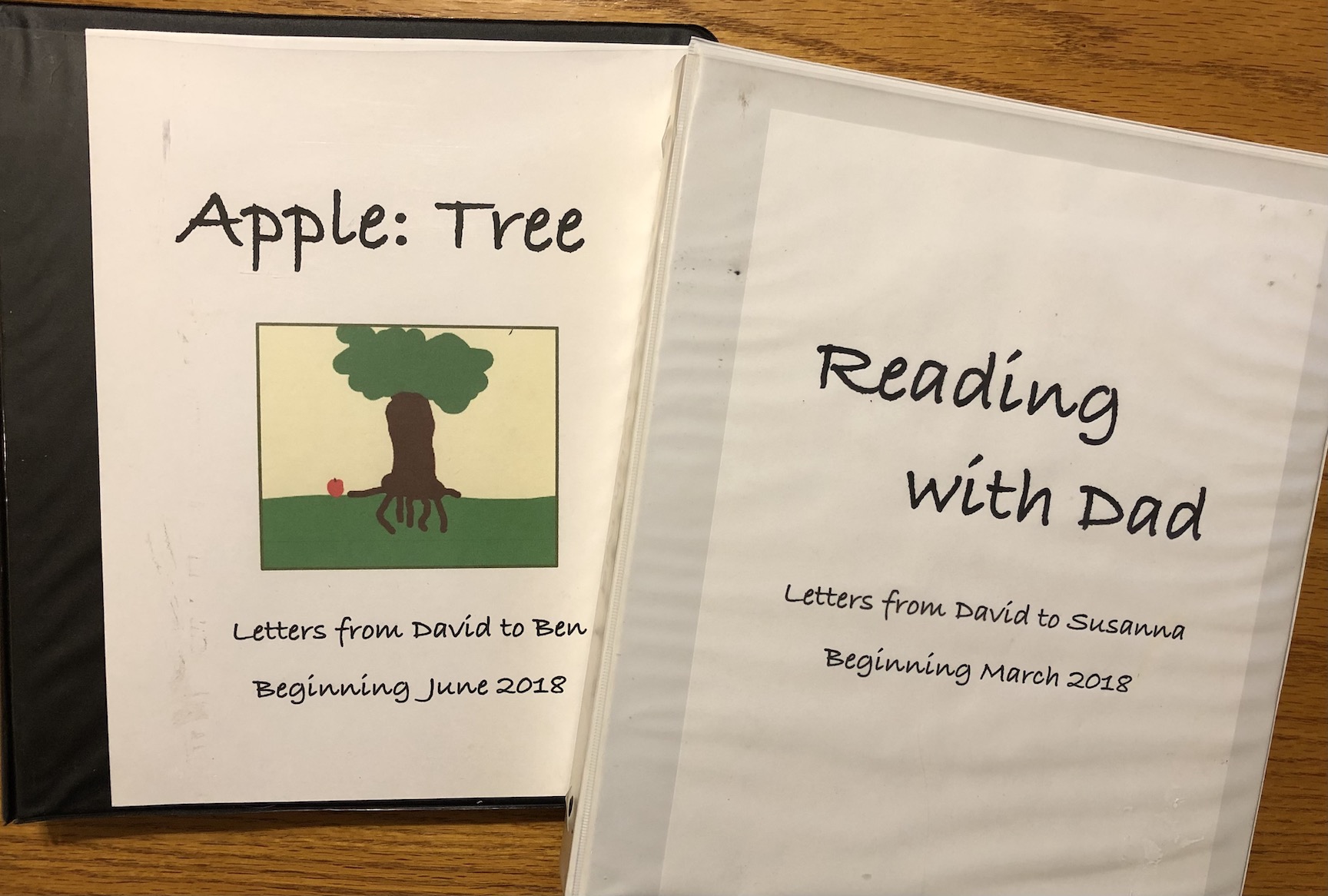
Occasionally as I write letters to my children, I include a piece I wrote during the chapter of life I’m describing. Hence, I pulled this piece out today . . . and decided to post it to my blog as well. Thirty-six years old, it’s held up remarkably well. I wrote it as a seminary class assignment in 1986. Our task was to “do Christology” by writing our own mini-gospel that explained who Jesus was, not in abstract theological terms but through story. This is my effort. Although my own Christology has changed a bit over the years, I’m still comfortable with how this tale unfolds. I did not know Jesus historically (of course!), but based on what I have read in the other gospels—and on how I have “encountered” him in my own life—this is my gospel, the good news about the Jesus that I have come to know.
Lest the Good News be True
David Weiss
To all you who wonder and tremble lest the good news be true: let me offer my troubled witness.

It all began with John, the son of the priest. He always had been different, a little beside himself about everything. When he was about twenty-seven years old, he left—just disappeared for three years. It seems he lived in the desert. No one knows for sure. He came back more than different and very beside himself. He came preaching repentance as if possessed, as if the world would end tomorrow. Crowds flocked to him down by the Jordan where he baptized thousands.
And Jesus and I went up, too. It was never the same after that. Up until that day everything about Jesus seemed so ordinary. He was quiet, gentle, properly religious. But maybe, as I think back, maybe he was only biding his time. All those years waiting for the right moment, the right person to push him over the edge.
In the twinkling of an eye everything changed. We were there listening as John told of the Kingdom. And then Jesus was listening far beyond John as though to the Kingdom itself. His eyes burned. When he stepped forward to be baptized John looked at him terrified. John baptized people a dime a dozen, but before Jesus, before his burning eyes, John froze. He seemed to feel as if all his preaching has come to life and was standing here in front of him. As he lowered Jesus into the river, I heard him whisper to himself, “Behold, the Lamb of God.”
I am pledged to honesty. If I had known what would follow, I never would have gone with Jesus that day. But I did, and from then on there was no turning back. The labor pains of the Kingdom had begun.
After the baptism Jesus left for forty days. He was scared. He told me, “The desert is calling, and I must go to be sifted like wheat. Pray for me.” He didn’t want to go. But he went; he was driven, caught up into the hand of God
He came back with his eyes quietly aflame with some vision of the Kingdom. He went back home; why, I don’t know. Home was the wrong place to come. Home is the place where you can spend your whole life saying you’re sorry. And Jesus had no time for apologies.
He took for his platform words from Isaiah: “I have been anointed to preach good news.” It didn’t fly. Some folks thought he was just plain presumptuous, a home-town boy with a big head. Others were uneasy because he wasn’t Jewish enough. (He did have some peculiar notions about there being room in the Kingdom for the Gentiles.) But mostly people were offended because Jesus called their lives into question—and into action. He was consumed with a passion for justice, and apart from justice he had no time for religious sacrifice. Like I said, it didn’t fly.
So he took his show on the road, traveling from village to village and throughout the countryside. Crowds of curiosity seekers sought him out, listening politely, sometimes marveling at his words—but always from a safe distance.
He spoke with almost naïve simplicity concerning the Kingdom. He said it came as a gift, and that it was in our very midst. He said the Kingdom was compassion even as God was compassion. It was always that, the talk about compassion, that got him in trouble. I guess he took it too seriously. It wasn’t just a nice word; for Jesus, compassion was everything. It was the Law and the Prophets. And it was to be pursued relentlessly. It was a costly compassion. It meant sharing possessions, prestige. And simple human honor.
A few of the upper crust of folks followed, mostly women. And a fair number of marginal people came along. And there were always children running about, like mascots of the Kingdom.
Jesus spoke almost entirely in stories and parables. It was a joy to hear him speak because you could tell that he knew—he saw already the Kingdom he was describing.
And there were the healings, which he accomplished with a quiet amazement. Not so much that he was surprised as he was ever delighted in the miracle of health. A lot of people came at least once just because of the miracles, but Jesus was never much of a showman. He knew, with a certain terror, that the power to heal wasn’t his own to claim.
You always felt like he really wanted to be accepted as an ordinary person. Everything about him was special, but he never needed it that way. Holiness seemed to engulf him, but he never desired a monopoly on it.
And there was the praying. Every time we turned around, he was praying. Every step he took, every gesture, every word seemed part of some grand prayer that was his life. Most of us breathe to live; Jesus prayed. And always to the Father, to this person of pure compassion. Not to some distant deity of power, but to an infinitely close and blossoming flower-Father of compassion. All of his denouncing injustice and proclaiming the Kingdom flowed from the Father’s compassion.
Most folks who didn’t like his talk about compassion just left and ignored him. Wrote him off as a fanatic of some sort, which I guess he was. But the religious leaders were another story. They, too, were in the business of holiness, and it all revolved around the temple and ritual and sacrifice. Jesus preached compassion and said that you could find in your neighbor a temple where to make sacrifices of compassion. The religious rulers despised him, and we often heard them murmuring against him.
So there was a certain unsettledness about his work. I mean, Jesus knew that he wasn’t winning big points with the folks in power. But that was never his goal. Still, he wasn’t blind to the threat he posed. I said that he never needed to be special, but he sensed that he was. He sensed that the world didn’t know what to do with such holiness. And I think he knew there was a long history of using holiness for blood sacrifices.
And he wondered about himself. On one level he spoke out of an inner confidence and seemed wholly in charge of himself. At other times you felt like he lived with himself as with as total stranger, never knowing what to expect next. So, one day, when he asked us, “Who do the people say that I am?” he wasn’t giving us a test. He wasn’t seeing if we knew. He was desperately and fearfully confirming his own worst fears. When Simon Peter blurted out, “You are the Christ!” Jesus’ eyes burned with anguish—he had been afraid of just that.
He had always been a bit uneasy with himself ever since the river Jordan. Increasingly during the months of preaching and healing it seemed at once more lightly and more fiercely that the hand of God rested upon him. He came to walk as though on air, but I always felt that he would’ve preferred his feet firmly on the ground. Maybe the best proof of who he was, was his uncomfortableness with holiness: he knew he was lost in it.
He set his face toward Jerusalem, and I think during those final weeks that we all knew something was up. He was more extreme than ever before, more human perhaps. He laughed, especially among the children, with an angelic fullness. When he was silent all the earth seemed still out of respect. And one day, approaching Jerusalem, he wept, and it was as though tears fell from heaven. He had come into his own, as they say, but for Jesus that meant coming into God.
When we entered the city he was at the peak of his popularity. It was the festival of Passover, so the people were in an excited mood. Word reached Jerusalem that Jesus was at hand, and a great crowd gathered to welcome us. They were hardly all avid followers, but as I said, there was a festive atmosphere, and our little band gave the city a good reason to party.
But it didn’t last long. Our first day in Jerusalem, we went up to the temple. Jesus’ eyes, which had burner brighter each step of the journey, exploded. His entire person had been given over to compassion as the way to holiness. There he saw holiness marketed in exchange for animals and sacrifices. He lost himself, seized by some holy wind, and he swept through the temple driving them out. And he spoke, as an heir might, saying, “This is my Father’s house, but you enter carrying coin purses and not compassion!”
Up until then the priests had tolerated him, uncertain before his popularity. But this was too much. They sensed that even the masses were uneasy about the temple incident. And they plotted to kill him.
It was a quiet week. Passover was on Thursday. Jesus seemed anxious, as if everything depended on Passover. We would share the meal together, all of us who had traveled with him. So we ate the meal, the great feast of liberation. The whole time his eyes were somewhere else. It was like at his baptism. For him this meal was no symbolic gesture; it was his life.
After we finished eating, he stood up with some bread and said, “Brothers, sisters, these many days you have walked with me. Together we have known life’s brokenness and have hungered for its wholeness. Now this bread will become as my body: broken. Share it, remembering me in a spirit of compassion—and behold, you make life whole.”
And he lifted up a cup, saying, “Brothers, sisters, together we have known life’s oppression and have thirsted for justice. Now this cup will become as my blood: poured out. Share it, remembering me in a spirit of compassion—and behold, you will taste justice.”
We all wondered at his words: broken body, poured out blood, and we trembled. Then he said to me, “The garden is calling, and I must go to be sifted like wheat. Pray for me.” I didn’t see him in the desert, and I didn’t see him in the garden, but I knew this was worse.
Some of us went with him, but he went deep beyond us into the garden alone to pray. When he returned his clothes were soaked with sweat, and his face was streaked with tears and covered with dirt. His eyes were lost behind a flame that blazed with pure darkness. Anyone who saw him then knew that all hell was going to break loose. And it did.
In a frenzied commotion he was taken, arrested by Roman soldiers at the behest of the chief priests. They charged him with blasphemy, but it came to this, pure and simple: compassion, as Jesus preached it, was bad business for the temple. They got Pilate to condemn him as well, claiming that he was stirring up the people. Pilate wasn’t frightened of Jesus (though perhaps he should’ve been), but he did fear the power of the priests over the people, and they, in turn, feared the power of Jesus with the people. And Pilate figured, what was one Jew more or less. So he let them crucify Jesus.
I write now of these things with numbness and with shame, for in those final hours I . . . we . . . all of us were most distant from Jesus, scattered by fear, than at any other time.
I heard reports of the trial, saying that Jesus never spoke in his own defense. It’s possible. He could’ve said nothing that Pilate would understand and nothing that the chief priests wanted to hear. Neither Rome nor the Temple was conversant in compassion.
On Friday they crucified him between criminals. The women, braver than we men in those last hours, recounted it to me. They said he prayed that the Father would not hold this against any of us. They said that Jesus promised a compassionate thief a place in the Kingdom. (So you see, even at death, he remained confident in the Kingdom’s coming.) And they said that just as he died he cried out, asking why God had forsaken him. I believe, however, that somehow forsakenness was God’s way of being with him there.
When they buried him, the chief priests imagined that they had washed their hands and their people of this Jesus and his talk about compassion. But it wasn’t so.
For several days we were aimless, frightened, wondering what to make of his confidence and forsakenness at the very end. On the first day of the week we gathered, numbly yet, to eat. Simon Peter gave thanks—and then, his eyes suddenly aflame, he took bread, broke it, and shared it with us. And he took the cup and did the same, saying only in a quiet voice, “To remember you, Lord.” And we ate and we drank, with a holy grief, with compassion. And suddenly—he was there in our midst! Alive. Eyes twinkling with joyful flames, and laughter on his tongue. He seemed to say, “Peace be with you.” And, “The Kingdom will come, and I will meet you there.”
No, we can’t explain it. Where are the words for something utterly new? But we believe now that the Kingdom of God’s peace will surely come. And that it will come on wings of compassion. And that if we wish to seek Jesus, we must seek him there.
Jesus was fond of saying, “What is the way to the Kingdom? Compassion is the way. And, more than this, compassion is the Kingdom come.” Some of us have taken to calling Jesus “the Way.” But that mustn’t be misunderstood. Jesus never claimed a monopoly on that title. He taught that our common divine destiny is to embrace compassion. He only proved less fearful of the cost than most of us. He was the Way inasmuch as he was pure compassion. But he invited us confidently to become the same.
It is still only weeks since these last events have happened. There is so much more to tell: the things he did, the stories he told, the lives he caught up into his own. And I will write more of these things. But I knew you would be anxious to hear what has transpired among us, as I know that you have faithfully followed it all from your distance.
I never could have wished for this man to come as he did. Such compassion was beyond my imagination. But he came. And to all you who wonder and tremble lest the good news be true—this is my troubled and joyful witness: it is.
May 27, 1986 — David R. Weiss
* * *
David Weiss is a theologian, writer, poet and hymnist, doing “public theology” around climate crisis, sexuality, justice, diversity, and peace. Reach him at drw59mn@gmail.com. Read more at www.davidrweiss.com where he blogs under the theme, “Full Frontal Faith: Erring on the Edge of Honest.” Support him in writing Community Supported Theology at www.patreon.com/fullfrontalfaith.